




Downspout Extensions in Oakland County: Where Should Roof Runoff Go?

A gutter can look perfectly installed and still leave a homeowner with a water problem. The missing piece is often the downspout discharge point. If runoff exits just a few inches from the house, the system may be collecting water effectively without moving it to a useful destination.
Downspout extensions help carry roof runoff away from the foundation, but their placement should follow the property's slope and drainage conditions. The goal is to move water toward an appropriate discharge area without sending it onto a neighbor's lot, across a walkway, or into a place where it will flow back toward the home.
This issue can be especially noticeable around homes in Clarkston and Waterford with varied lot grades, garden beds beside the house, or driveways close to the foundation.
Why downspouts matter as much as the gutters
The roof concentrates rainfall over a large surface and delivers it to the gutter. The gutter then channels that water toward a limited number of outlets. That means a downspout may carry runoff from a substantial section of roof during a storm.
If water is released beside a basement wall, it can saturate the nearby soil. Over time, poor surface drainage can contribute to damp conditions, erosion, and pressure on existing foundation waterproofing. Not every wet basement is caused by gutters, but downspout discharge is one of the first exterior conditions worth checking.
A good installation considers the entire route: roof edge, gutter slope, outlet, vertical downspout, elbows, and final discharge location. An extension is most useful when the rest of that route is functioning.
Signs that a downspout needs a closer look
Start outside during or shortly after rainfall, when you can safely observe how water moves. Warning signs include soil washing away beneath an elbow, a deep splash mark in mulch, or a puddle forming repeatedly at the same foundation corner.
Other clues are green algae or persistent moisture on nearby masonry, concentrated runoff crossing a sidewalk, and water returning toward the house because the ground slopes the wrong direction.
Look above the downspout too. Water spilling over the gutter near the outlet may indicate a blockage or a system that cannot handle the volume reaching that corner. Extending the discharge will not fix a clogged downspout or incorrectly pitched gutter.
Surface extensions, splash blocks, and underground connections
A surface extension provides a visible path for water to travel beyond the immediate foundation area. It is accessible for inspection, which can be helpful when leaves or ice collect. An appropriately positioned splash block can help reduce soil erosion where water exits, but by itself may not send water far enough on a poorly graded lot.
Some properties use an underground discharge system. These arrangements require more planning because an underground pipe can clog, freeze, settle, or discharge in an unsuitable place if designed poorly. They also involve buried utilities and potentially local drainage requirements. Have the entire outlet and drainage route assessed before adding a buried connection.
There is no single extension length that fits every home. The right approach depends on slope, soil, landscaping, walkways, and nearby drainage features. What matters is that water moves away from the building and remains in an appropriate place.
Plan downspouts around roofline and property layout
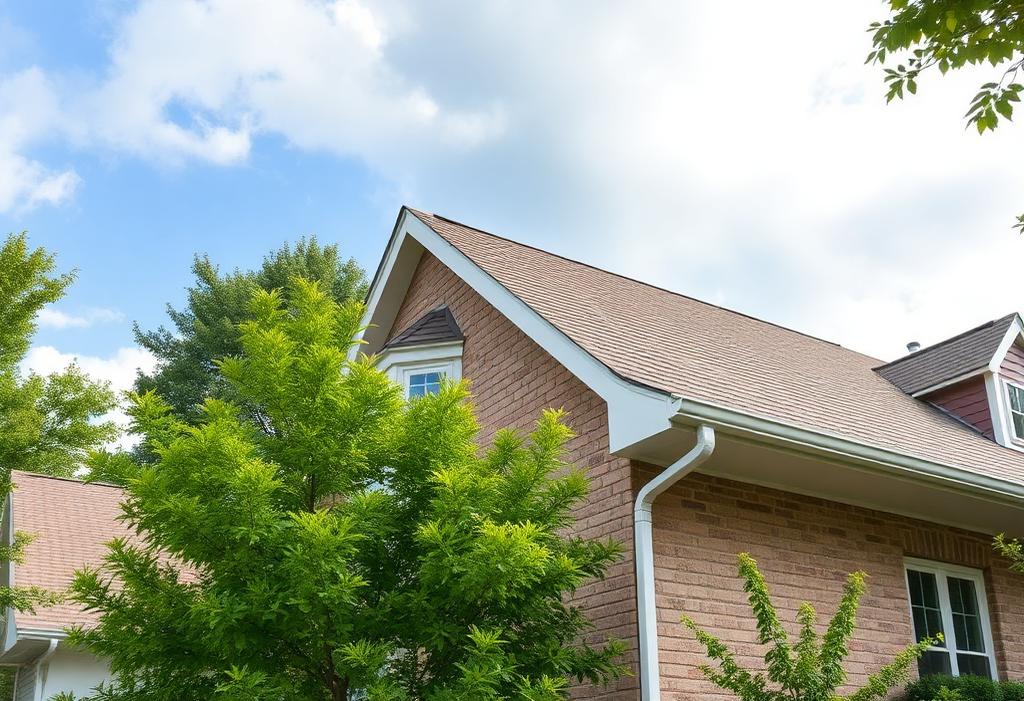
A multi-gable roof sends water to different points than a simple rectangular roof. Inside valleys can concentrate runoff on one section of gutter. Long runs, steep slopes, and large roof planes may require additional outlet capacity or a revised downspout location.
During a gutter replacement, it is worth reviewing whether the existing outlet locations still make sense. A downspout hidden neatly behind landscaping is not a good solution if it sends water toward an entry or creates a trip hazard with an extension.
Color and appearance matter, but function comes first. A well-planned downspout should fit the house while remaining easy to inspect and keep clear.
How seamless gutters fit into the drainage plan
Custom-fitted seamless gutters reduce the number of long-run joints compared with sectional systems. That can help minimize potential leak points, but corners, end caps, outlets, and downspouts still need careful installation.
J.R. England installs 5-inch and 6-inch seamless aluminum gutters and downspouts throughout Oakland County. If the existing gutters are failing, evaluating a replacement system can be more productive than adding an extension to a poorly functioning setup.
For an existing system in good condition, ask the contractor to identify where runoff is concentrating and whether the discharge arrangement is appropriate. The most durable answer is the one that addresses the problem rather than moving it a few feet down the line.
A simple homeowner observation checklist
After a moderate rain, make note of which downspouts discharge freely, where water collects, and whether puddles disappear promptly. Photograph problem areas from the ground. Check whether extensions have become disconnected after mowing or yard work, and keep visible openings free of leaves.
If you see movement in the foundation, recurring basement seepage, or extensive standing water, involve a qualified drainage or foundation specialist as needed. Gutters are an important part of water management, not a complete substitute for grading and waterproofing.
Frequently asked questions
How far should a downspout discharge from a Michigan house? There is no universal distance for every lot. Water should reach an appropriate location where the ground carries it away from the foundation. Grading and local requirements determine the best arrangement.
Will a downspout extension fix basement leaks? It may reduce water concentration near the house if runoff is part of the problem, but basement moisture can have multiple causes and may need a broader inspection.
Can a new seamless gutter system improve downspout placement? Yes. Replacement is an opportunity to evaluate gutter size, outlet count, and discharge locations together rather than preserving a layout that performs poorly.
Get a Better Drainage Plan in Oakland County
If rainwater collects near your house in Clarkston, Waterford, White Lake, or elsewhere in Oakland County, contact J.R. England for a free estimate on seamless gutters and downspout options. Call (248) 872-9760 or visit request a free estimate.
Ready for a free estimate?
Get dependable gutter service from a trusted local team in Oakland County, MI.
GET A FREE QUOTE