




A Michigan Winter Gutter Checklist for Oakland County Homeowners

November is the time many Oakland County homeowners move from leaf cleanup to winter preparation. That transition is important for gutters. Debris collected in October can remain near outlets, standing water can become ice, and the first significant snowmelt may reveal drainage problems that were overlooked in fall.
The most useful winter gutter preparation focuses on three things: a clear water path, sound gutter attachment, and downspouts that discharge away from the house. A clean gutter alone is not enough if it slopes the wrong direction or empties onto a walkway.
Use this checklist as a ground-level guide for homes in Clarkston, Waterford, Rochester Hills, and nearby Oakland County communities. For high or difficult-to-reach gutters, hire a professional rather than working from a ladder in cold or wet conditions.
1. Look for leftover leaf debris at the roof edge
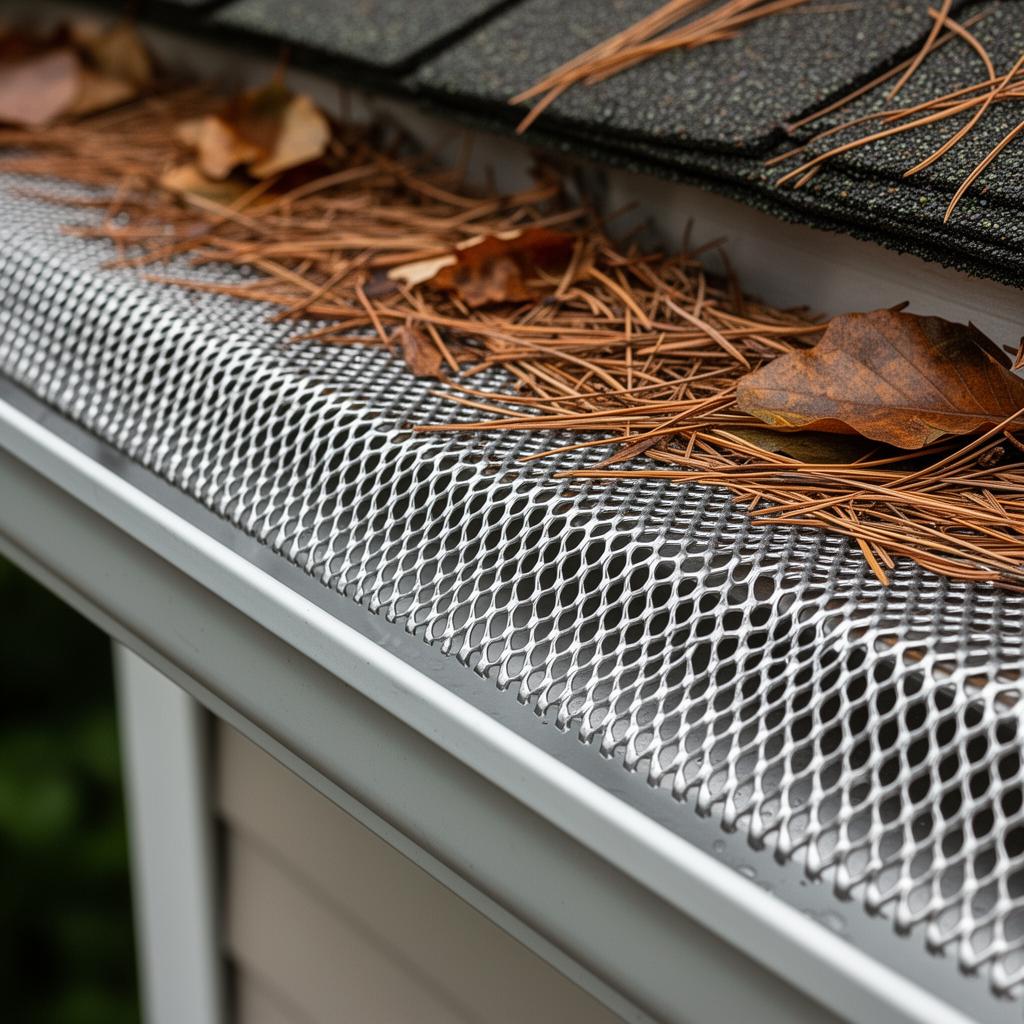
Even after most leaves have fallen, small clusters can remain in roof valleys and near gutter outlets. Wind may continue moving that material into the gutter through late fall. Pine needles, seed pods, and shingle granules can also collect long after broad leaves are gone.
From a safe location, look for vegetation sticking above the gutter line or water spilling over the edge during rainfall. If you have gutter guards, check whether leaves are building up on top of the screens, especially around valleys.
Do not assume that a guard eliminates inspection. A guard reduces debris entering the gutter, but surface buildup may still need attention. Winter preparation is about keeping a clear route for water, not just keeping the trough visually tidy.
2. Check whether the gutters hold water after rain
A properly designed gutter has a slight slope toward its outlet. If a large amount of water sits in a section long after rainfall stops, the cause may be debris, a sagging run, or an alignment problem.
Standing water becomes more concerning as temperatures drop. Water that cannot drain may freeze and add weight to a poorly secured gutter. Ice can also complicate an existing leak or make a low spot more difficult to access safely.
Avoid trying to chip or pry frozen material from a gutter. That can damage the metal, fasteners, or roof edge. Document persistent ponding and have the system evaluated when conditions permit.
3. Look for sagging runs and loose attachment
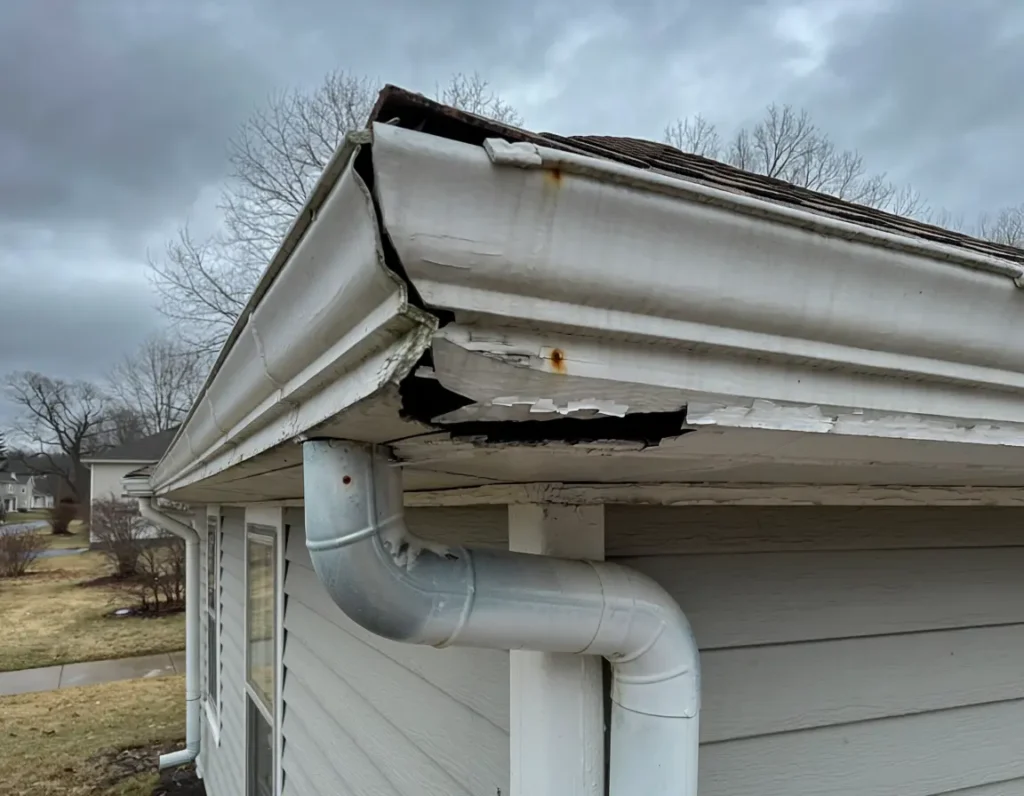
Inspect the roofline from the driveway or yard. Does a gutter appear to dip between its attachment points? Is there a visible gap between the gutter and fascia? Are stains running down the wall behind the gutter rather than through the outlet?
These signs can suggest loose hardware, movement, or damaged support surfaces. A gutter already pulling away from the house is not well positioned to handle winter conditions.
If the fascia itself is damaged, an appropriate specialist may need to address that supporting surface before gutter replacement. A strong new gutter cannot compensate for a compromised attachment point.
4. Follow the downspout route to the ground
Trace each visible downspout from the outlet to its final discharge. Check for disconnected elbows, crushed sections, and extensions that have shifted while landscaping or mowing. Leaves can also settle into the bottom opening.
Pay particular attention to downspouts that empty onto sidewalks, driveways, and entry paths. Water released onto a hard surface may create a slip hazard when temperatures fall below freezing.
The right discharge location depends on the property's slope and drainage arrangement. Water should be directed to an appropriate location away from the building, not routed toward a neighbor's property or a spot where it can return to the foundation.
5. Note recurring overflow areas before snow arrives
A short video of overflowing gutters during a rainy day can be helpful for an installer. It shows the problem while it is happening and may reveal whether overflow occurs at a roof valley, a corner, or directly above the downspout.
This information can help distinguish between a possible obstruction, inadequate outlet capacity, and poor gutter alignment. It can also guide decisions about a future replacement rather than simply copying the existing layout.
If water repeatedly reaches siding or the foundation, do not postpone an evaluation solely because winter is approaching. Weather may affect when work can be performed, but understanding the problem helps you plan a safer solution.
6. Understand what gutter guards can and cannot do
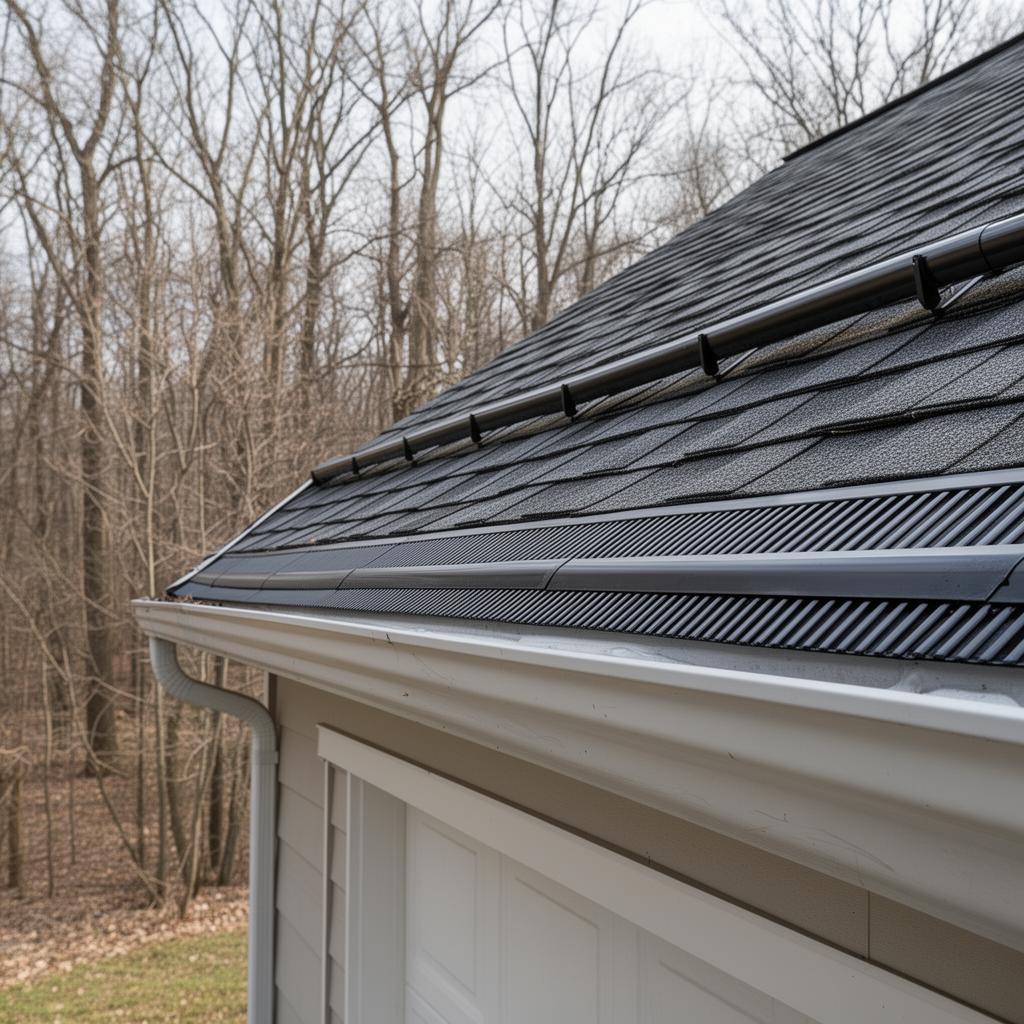
Stainless steel micro-mesh guards are designed to reduce leaves, pine needles, and small debris entering the gutters. With less material collecting inside, outlets are less likely to become restricted by falling vegetation.
Guards do not melt snow or prevent ice dams on the roof. Ice dams are associated with heat loss, roof temperatures, weather conditions, and other building factors. If you see large ice ridges at the roof edge or water entering the home, consult a qualified roofing or building-envelope professional.
For a home with generally sound gutters and recurring leaf buildup, micro-mesh protection may be worth discussing before the next heavy debris season.
7. Decide whether a new gutter system is needed
If the gutter is consistently misaligned, badly corroded, separated from the house, or difficult to keep watertight, replacement may be a better long-term approach than repeated temporary attention.
J.R. England installs 5-inch and 6-inch seamless aluminum gutters and downspouts in Oakland County. A replacement estimate can address gutter size, attachment, outlet placement, and discharge together. The company also installs micro-mesh guards over suitable systems, with a debris clear-out and tune-up included in the guard service.
Frequently asked questions
Should Michigan gutters be empty before freezing weather? They should be free of standing water caused by clogs or poor pitch and have a functioning drainage route. A properly sloped gutter should drain toward its outlet after rain.
Can clogged gutters make winter water problems worse? Yes. Debris can restrict drainage, allowing water to overflow or remain in the system and potentially freeze. Other roof and drainage issues can contribute too.
Do gutter guards prevent ice dams? No. They help screen debris but do not address the roof heat and ventilation factors that cause many ice dams.
Prepare Your Oakland County Gutters Before Deep Winter
If your system is sagging, holding water, or overflowing in Clarkston, Waterford, Lake Orion, or surrounding Oakland County communities, request a free gutter estimate from J.R. England. Call (248) 872-9760 or visit request a free estimate to discuss seamless gutters and gutter guards.
Ready for a free estimate?
Get dependable gutter service from a trusted local team in Oakland County, MI.
GET A FREE QUOTE