




If you are planning seamless gutter installation or replacing an old system, one of the first questions is what size gutter your home actually needs. Most residential homes use either 5-inch or 6-inch gutters, and choosing the right size makes a real difference in how well water drains away from your roof and foundation—especially during the heavy rain and snowmelt common in Oakland County, Michigan.
Why gutter size matters
Gutters are sized by the width across the top opening. A 5-inch gutter is standard for many homes, but it is not always enough. If your roof has a large surface area or a steep pitch, it can collect and channel significantly more water than a smaller system can handle. Oversized 6-inch gutters move more water per foot and are less likely to overflow during heavy storms.
- 5-inch gutters: Common on smaller homes and standard rooflines
- 6-inch gutters: Better for large roofs, steep pitches, or areas with heavy rainfall
How to measure your existing gutters
If you are unsure what size is currently on your home, measuring is simple:
- 1Place a measuring tape across the top opening of the gutter from edge to edge.
- 2Do not measure the bottom or the depth—gutter size is based on the top width.
- 3A measurement close to 5 inches means you have a 5-inch gutter system.
- 4A measurement close to 6 inches means you have a 6-inch gutter system.
- 5If the gutter is full of debris, clear a small section first so you can measure accurately.

5-inch vs 6-inch gutters: what is the difference?
Both sizes use K-style profiles (the most common shape), but the capacity difference is significant. A 6-inch gutter can handle roughly 40–50% more water than a 5-inch gutter. That extra capacity matters in situations like these:
- Homes with large or complex rooflines that collect more runoff
- Steeply pitched roofs that send water down faster
- Properties surrounded by trees where clogs can reduce effective capacity
- Homes in areas with frequent heavy rainfall or rapid snowmelt
Which size is right for your Oakland County home?
For many homes in Oakland County, a 5-inch system works fine if the roofline is moderate and the gutters are kept clear. But if you notice overflow during storms, sagging from water weight, or repeated clogs reducing flow, a 6-inch upgrade may be worth considering.
Other factors to keep in mind:
- Downspout size must match or exceed gutter capacity for proper drainage
- Gutter pitch (slope) affects how fast water moves toward the downspouts
- The number and placement of downspouts matter just as much as gutter width
What about downspout size?
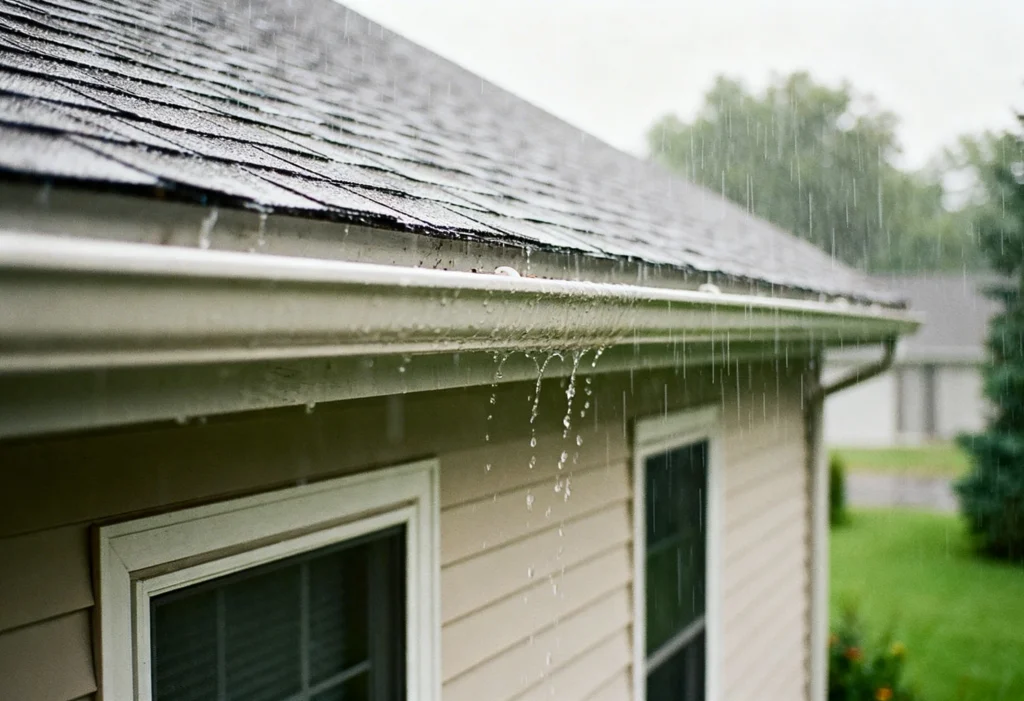
Even the right gutter size will underperform if the downspouts are too small or poorly placed. A standard 2x3-inch downspout is common with 5-inch gutters, while 6-inch systems typically pair with 3x4-inch downspouts for better flow. During a professional evaluation, your contractor should assess the full system—not just the gutter width—to make sure water moves efficiently away from your home.
When in doubt, get a professional opinion
Measuring gutters is easy, but sizing a complete system involves more than width alone. Roof area, pitch, fascia condition, and drainage layout all play a role. If you are not sure whether 5-inch or 6-inch gutters are right for your home, a quick inspection can give you a clear recommendation.
J.R. England offers free estimates for seamless gutter installation in Oakland County, MI and surrounding areas. We will evaluate your roofline, measure accurately, and recommend the right gutter size and layout for your home. Contact us today for a free quote.
Ready for a free estimate?
Get dependable gutter service from a trusted local team in Oakland County, MI.
GET A FREE QUOTE